Finding your signature scent is about more than just liking a fragrance—it’s about discovering something that reflects your personality, lifestyle, and emotional preferences. This comprehensive guide walks you through understanding fragrance notes, testing perfumes effectively, and choosing a scent that lasts all day while feeling uniquely yours.
Finding your signature scent is one of the most personal and rewarding journeys in the world of fragrance. It’s not just about smelling nice—it’s about discovering a fragrance that resonates with who you are today, who you’ve been, and who you want to become. Whether you’re new to perfumery or a seasoned enthusiast, this step-by-step guide will help you navigate the vast world of scents with confidence and clarity.
By the end of this article, you’ll know how to identify your scent preferences, understand fragrance composition, test perfumes like a pro, and ultimately choose a fragrance that feels authentically *you*. So grab a notebook, clear your schedule, and let’s begin the search for your perfect match.
Quick Answers to Common Questions
Tip/Question?
Answer: Always test perfume on your skin, not paper strips. Skin chemistry changes how a scent unfolds, and paper doesn’t reflect real-life wear.
Tip/Question?
Answer: Moisturize before applying perfume. Dry skin absorbs fragrance quickly, causing it to fade faster. A light unscented lotion can help it last longer.
Tip/Question?
Answer: Don’t buy a fragrance just because it’s popular. What works for others may not suit your unique chemistry or lifestyle.
Tip/Question?
Answer: Keep a fragrance journal. Write down notes after wearing each scent—what you liked, when you wore it, and how it performed.
Tip/Question?
Answer: Reapply perfume lightly throughout the day if needed. Use solid perfume or rollerballs for touch-ups without overdoing it.
Step 1: Understand the Fragrance Families
Before you start sniffing bottles, it helps to know what types of scents exist. Fragrances are grouped into families based on their dominant notes. Understanding these can help you narrow down your choices.
Floral
The floral family includes everything from delicate rose and jasmine to bold tuberose and lily of the valley. These scents often evoke femininity, romance, or freshness. Popular examples include Chanel No. 5 and Dior J’adore.
Oriental
Rich, warm, and sometimes spicy, oriental fragrances feature ingredients like vanilla, amber, sandalwood, and musk. They’re perfect for evening wear or cooler months. Think Viktor & Rolf Flowerbomb or Tom Ford Black Orchid.
Woody
Sandalwood, cedar, vetiver, and patchouli define this earthy, grounding category. Woody scents are unisex and timeless—ideal for everyday wear. Commonly found in fragrances by Jo Malone or Le Labo.
Fresh/Citrus
Bright, clean, and uplifting, these scents use lemon, bergamot, grapefruit, and aquatic notes. Great for daytime or hot weather. A classic example is Acqua di Gio by Giorgio Armani.
Chypre
Complex and elegant, chypre blends citrus top notes with mossy woods and leathery base notes. It’s sophisticated and long-lasting. Paco Rabanne 1 Million or Hermès Eau des Merveilles fall into this category.
Understanding these families gives you a framework. Start by asking: Do I lean toward light and airy or rich and deep? Fresh and clean or warm and sensual?
Step 2: Identify Your Lifestyle and Environment
Your daily life plays a huge role in which scent works best for you. Consider where you spend most of your time, what you do, and how much time you can dedicate to reapplying perfume.
Office or Professional Settings
For work environments, opt for subtle, professional scents that won’t overpower the space. Light florals, clean musks, or fresh citrus work well. Avoid overly sweet or heavy fragrances during meetings or client interactions.
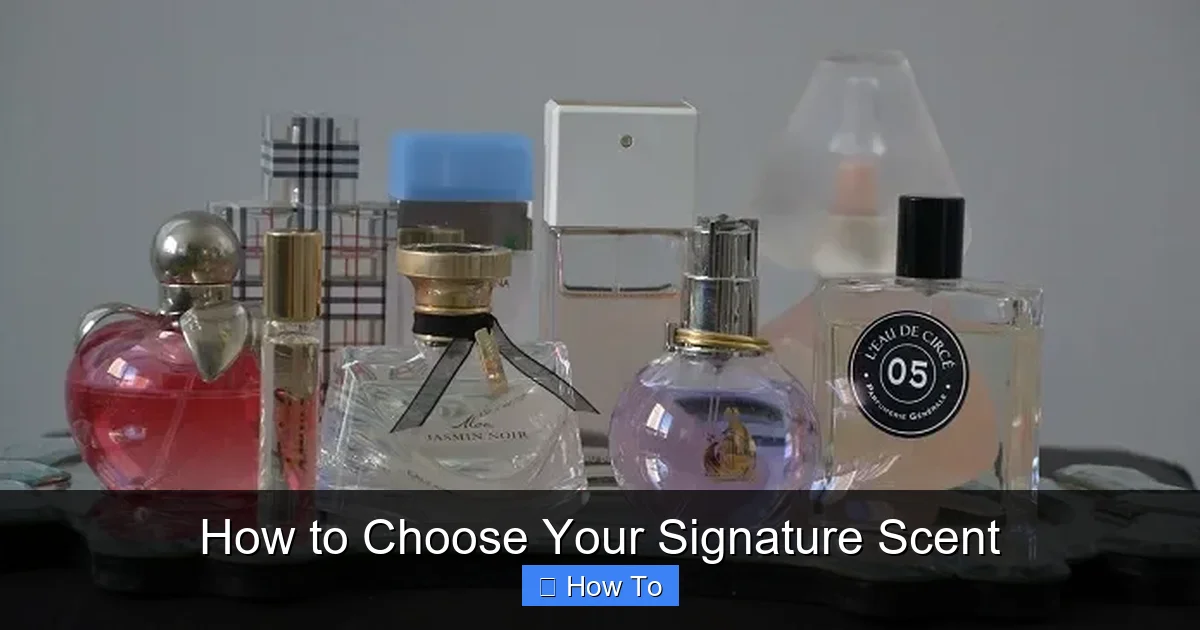
Visual guide about How to Choose Your Signature Scent
Image source: i0.wp.com
Casual Everyday Wear
If you’re out running errands or meeting friends, choose versatile scents that transition easily. A light wood or soft floral can adapt from morning coffee to afternoon shopping without feeling out of place.
Evening or Special Occasions
For nights out or formal events, go bold. Oriental, spicy, or gourmand scents make a statement. These are designed to last longer and leave a memorable impression.
Climate and Season
In humid climates, lighter fragrances evaporate faster and may clash with sweat. In dry or cold weather, heavier scents hold better. Winter calls for richer oils; summer favors breezy, watery notes.
Ask yourself: What’s my typical day like? Where do I need my scent to perform? How much time do I have between applications?
Step 3: Learn About Fragrance Notes and Longevity
Every perfume unfolds in stages—top, heart (middle), and base notes. Knowing how they work together helps you choose a balanced fragrance.
Top Notes
These are the first impressions—usually light and volatile. Examples: bergamot, lemon, mint. They fade within 15–30 minutes.
Heart Notes
The soul of the fragrance. Appear after top notes disappear. Common heart notes: rose, lavender, geranium. Last 2–6 hours.
Base Notes
What lingers. Deep, rich, and long-lasting. Examples: sandalwood, vanilla, musk. Can last 6+ hours or even days.
When choosing your signature scent, look for balance. A fragrance with strong top notes but weak base notes may smell great at first but vanish quickly.
Step 4: Test Perfume Like a Pro
Blind buying rarely pays off. The real test happens on your skin, where chemistry, temperature, and pH affect how a scent evolves.
Where to Apply
Wrist, neck, behind ears, and inner elbows. These are warm pulse points that help diffuse the fragrance naturally.
How Much to Spray
Two sprays per pulse point is usually enough. More doesn’t mean better—it can overwhelm or cause irritation.
Wait Before Deciding
Don’t judge a perfume right after spraying. Wait 10–15 minutes to see how it settles. Then come back in 4–6 hours to check the full development.
Wear It for a Full Day
The best way to test is to apply in the morning and go about your day. Note how it changes with food, activity, and environment.
If possible, bring a friend along to get a second opinion. Sometimes others notice nuances you miss.
Step 5: Pay Attention to Skin Chemistry
Your body chemistry affects every fragrance differently. What smells clean on one person might smell soapy on another.
Common Reactions
- Soapy or Metallic: Often caused by alcohol reacting with skin oils. May indicate poor formulation or skin incompatibility.
- Too Strong or Harsh: Could mean the concentration (e.g., parfum vs. eau de toilette) is too high for your skin.
- Fades Too Fast: Might be due to low oil content or incompatible base notes.
To test compatibility:
– Try unscented lotions before applying perfume.
– Patch test on inner elbow for 24 hours.
– Avoid mixing multiple fragrances—they can clash unpredictably.
Step 6: Consider Concentration and Type of Fragrance
Not all perfumes are created equal. The concentration determines strength, longevity, and price.
Eau de Cologne (EDC)
Lighter, refreshing. 2–5% fragrance oil. Best for summer or light wear. Example: Creed Aventus.
Eau de Toilette (EDT)
Moderate strength, 5–10%. Good all-day wear. Ideal for daily use. Example: Calvin Klein CK One.
Eau de Parfum (EDP)
Stronger, 10–15%. Long-lasting. Great for special occasions. Example: YSL Black Opium.
Parfum/Oil
Highest concentration (15–40%). Intense, lasts all day. Best for evening or winter. Example: Diptyque Baies.
Choose based on how much projection and sillage (how far the scent travels) you want. If you prefer subtlety, go lower. If you want to make an impression, opt for higher concentration.
Step 7: Trust Your Instincts—But Don’t Rush
Your gut feeling matters most. If a scent makes you smile, recall a happy memory, or feels “like me,” it could be your signature.
But avoid impulse buys. Visit stores during different times of day. Smell at least 3–5 scents before deciding. Keep a journal to track what you like or dislike.
Also, remember that scents evolve. A fragrance that feels too intense now might grow on you over time.
Troubleshooting Common Issues
My Scent Fades Too Quickly
Try applying to moisturized skin—dry skin absorbs fragrance faster. Also, consider a higher concentration like EDP or parfum.
It Smells Different on Me Than in the Bottle
This is normal. Skin chemistry varies. Stick with what feels good to you, not what others say.
I Can’t Decide Between Two Scents
Test both over several days. Wear each on different outfits or occasions. Sometimes context helps.
My Signature Scent Feels “Wrong” After a Few Months
It’s okay to change! Your style, mood, or lifestyle may have shifted. Your signature scent can evolve too.
Final Thoughts: Your Signature Scent Is Personal
There’s no universal answer to what makes the perfect signature scent. Some people love classics like Chanel No. 5; others thrive in niche indie fragrances. What matters isn’t popularity—it’s authenticity.
Take your time. Experiment. Have fun. And when you finally find that one fragrance that feels like an invisible piece of jewelry only you can wear, you’ll know it’s yours.
Remember: Your signature scent isn’t static. It can grow with you, change with seasons, and reflect new chapters of your life. Embrace the journey.
🎥 Related Video: 7 EASY Steps To Find Your Signature Scent (Backed By Science!)
📺 Real Men Real Style
https://bit.ly/3mFvF9e – Click here to join the Early Bird list for Mission Fragrances to get the latest updates!